Peak Brightness (Nits) Explained: Why It Matters More Than Ever
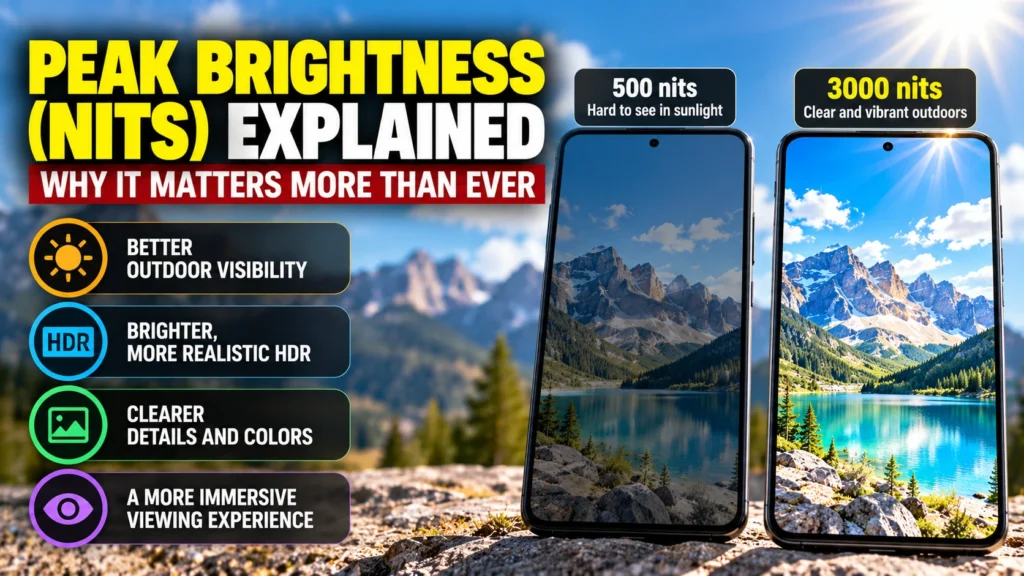
What peak brightness in nits actually measures, why outdoor visibility and HDR both depend on it, and how sustained brightness differs from peak figures.
Peak brightness, measured in nits (a standard unit of luminance), indicates the maximum brightness level a display can produce, and has become an increasingly emphasized specification as HDR content and outdoor smartphone use have both made high peak brightness a genuinely meaningful factor in real-world display quality rather than just a marketing figure.
Why Outdoor Visibility Depends Heavily on Peak Brightness
A display’s ability to remain clearly visible and readable under direct outdoor sunlight depends heavily on peak brightness, since ambient outdoor light levels can otherwise wash out a display with insufficient maximum brightness, making high peak brightness figures a genuinely practical benefit for anyone who regularly uses their phone outdoors, checks navigation while driving, or uses a laptop outside, rather than purely a specification that matters only in a lab testing environment.
Peak Brightness and HDR Content
High dynamic range (HDR) video and photo content specifically relies on displays capable of high peak brightness to accurately reproduce the intense highlight detail HDR content is mastered to display, meaning a display with genuinely high, sustained peak brightness capability delivers a noticeably more impactful HDR viewing experience, with bright highlights like sunlit skies or bright reflections appearing appropriately intense rather than capped and flattened by insufficient display brightness headroom.
The Difference Between Peak and Sustained Brightness
A critical distinction independent reviewers consistently emphasize is that a display’s advertised peak brightness figure typically represents a brief, momentary maximum, often achievable only for a small portion of the screen displaying HDR highlight content, rather than a brightness level the entire display can sustain continuously without triggering thermal throttling, meaning sustained full-screen brightness in bright outdoor conditions is often meaningfully lower than a device’s headline peak brightness specification might suggest.
How OLED and LCD Panels Differ on Brightness
OLED displays have historically faced more pronounced peak-versus-sustained brightness gaps compared with LCD displays, since OLED’s per-pixel light emission generates more concentrated heat at very high brightness levels, though recent OLED panel generations have substantially closed this gap through improved panel materials and more sophisticated thermal management, an area where independent display testing continues to show meaningful year-over-year improvement.
Comparing Brightness Specifications Across Marketing Materials
Because manufacturers don’t always specify clearly whether a quoted brightness figure represents peak momentary brightness or sustained full-screen brightness, independent third-party display testing from reviewers who measure both figures under standardized conditions generally provides a more reliable basis for comparison than relying purely on manufacturer marketing specifications alone.
Bottom Line
Peak brightness (nits) has become a genuinely important practical specification for both outdoor visibility and HDR content quality, though the gap between a display’s headline peak brightness figure and what it can sustain continuously is worth understanding before treating peak brightness numbers as directly comparable across different displays. Independent testing that measures both peak and sustained brightness offers the most reliable basis for real-world comparison.
Sources
- Display luminance measurement standards and nits unit documentation
- DisplayMate Technologies, peak and sustained brightness testing methodology
- Independent smartphone and TV outdoor visibility testing from major tech outlets
- HDR display mastering and brightness requirement technical documentation