IP68 Rating Explained: What It Actually Protects Against
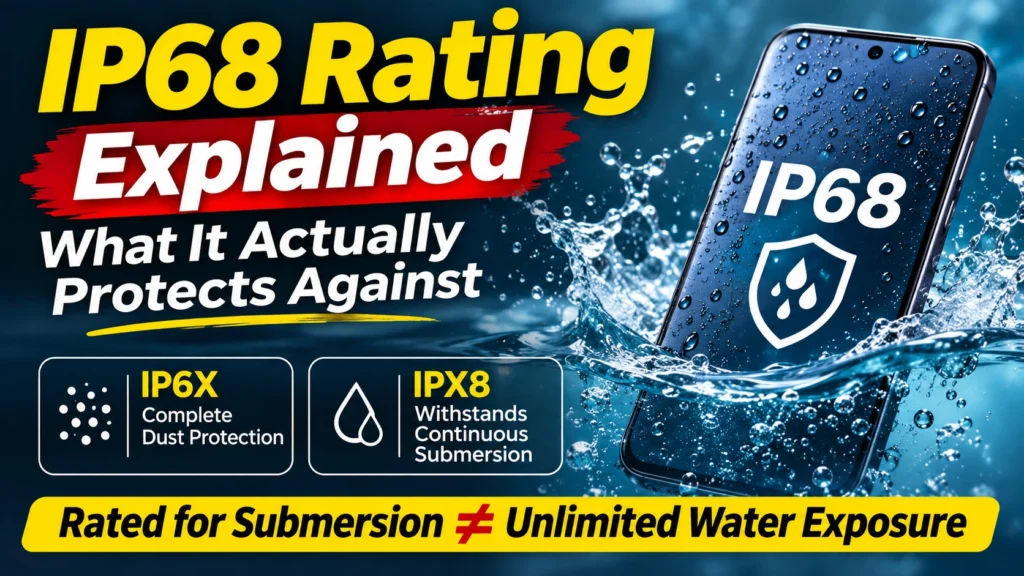
What the IP68 rating number actually means, why it doesn't cover every liquid or every scenario, and how it differs from other IP rating combinations.
An IP68 rating indicates a device has passed standardized testing for both dust and water resistance under specific controlled laboratory conditions, with the two digits following “IP” (Ingress Protection) each representing a separate protection category, dust resistance and water resistance respectively, tested and rated independently against an internationally recognized testing standard.
Breaking Down What Each Digit Actually Means
The first digit in an IP rating indicates solid particle and dust resistance on a scale from 0 to 6, with 6 representing complete protection against dust ingress, while the second digit indicates liquid resistance on a separate scale, with 8 representing protection against continuous submersion in water beyond one meter depth under specific manufacturer-defined test conditions, meaning IP68 specifically represents the highest commonly rated combination for consumer electronics, complete dust protection and protection against sustained deeper water submersion.
Why "Rated for Submersion" Doesn't Mean Unlimited Water Exposure
A critical detail independent reviewers consistently emphasize is that IP68 testing occurs under specific controlled laboratory conditions using still, fresh water at a defined depth and duration set by each individual manufacturer, meaning real-world scenarios involving moving water, water at higher pressure or greater depth than tested, saltwater, chlorinated pool water, or hot water can all behave differently than the controlled lab test conditions the rating was actually based on, which is why manufacturers frequently include specific caveats limiting warranty coverage for water damage despite an IP68 rating.
Why Manufacturer-Specific Depth and Duration Figures Vary
Because the IP68 standard itself doesn’t mandate one single universal depth and duration for the water resistance test, different manufacturers can and do test their own devices to different specific depth and duration parameters while still qualifying for the same IP68 rating label, meaning two different devices both rated IP68 aren’t necessarily guaranteed to withstand identical real-world water exposure conditions, making manufacturer-specific detailed water resistance documentation worth checking beyond the headline IP68 rating alone.
Water Resistance Can Degrade Over Time
Independent testing and repair industry experience have both established that a device’s water and dust resistance seals, including gaskets and adhesives, can degrade gradually over time due to normal wear, accidental drops, and previous repairs, meaning an IP68 rating reflects a device’s protection level when new, rather than a permanent, unchanging guarantee that persists identically throughout the device’s entire usable lifespan.
How IP68 Compares to Other Common IP Ratings
Common alternative ratings include IP67, which still offers strong dust protection but a lower water resistance tier limited to shallower, shorter-duration submersion, and IP65 or IP54, which offer protection primarily against water spray and splashing rather than genuine submersion, meaning checking the specific IP rating digits, rather than assuming all “water-resistant” marketing claims are equivalent, provides considerably more accurate information about a device’s actual tested protection level.
Bottom Line
An IP68 rating indicates a device passed standardized testing for complete dust protection and water resistance against sustained submersion, but the specific test depth, duration, and water type are manufacturer-defined and vary between devices, meaning IP68 shouldn’t be treated as an unlimited guarantee against any water exposure scenario. Checking manufacturer-specific water resistance documentation and understanding that protection can degrade over time provides a more accurate picture than the headline rating alone.
Sources
- IEC 60529 Ingress Protection (IP) rating international testing standard documentation
- Manufacturer-specific IP68 water resistance testing conditions and warranty documentation
- Independent smartphone water resistance real-world testing from major tech outlets
- Device repair industry analysis of water resistance seal degradation over time