
Category: Compare
Side-by-side technology verdicts that explain what wins, why it wins, and who should buy it.

Battery Capacity (mAh) Explained: Why Bigger Doesn’t Always Win
What battery capacity in mAh actually measures, why it doesn't directly predict battery life, and what other...
Aspect Ratio Explained: How Screen Shape Affects Everyday Use
What display aspect ratio actually means, how it differs across phones, laptops and TVs, and why the right...
Color Gamut Explained: DCI-P3, sRGB and What They Mean
What color gamut actually measures, how sRGB and DCI-P3 differ, and why a wider gamut isn't automatically...
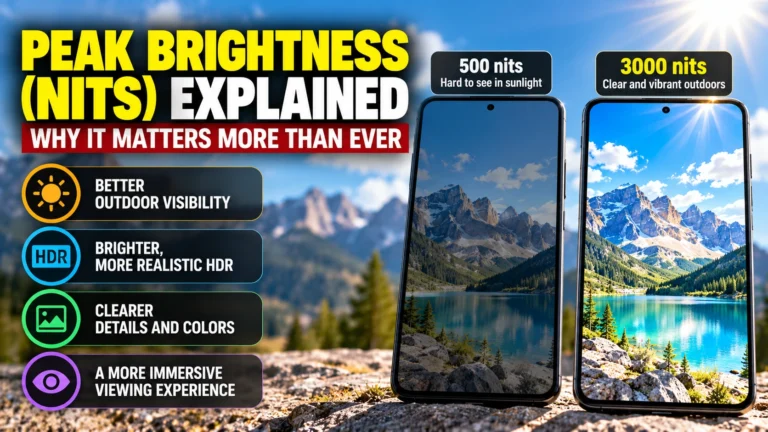
Peak Brightness (Nits) Explained: Why It Matters More Than Ever
What peak brightness in nits actually measures, why outdoor visibility and HDR both depend on it, and how...
Pixel Density (PPI) Explained: When Sharper Stops Mattering
How pixel density (PPI) is calculated, why more isn't always noticeable, and how viewing distance changes...
Screen-to-Body Ratio Explained: What It Actually Measures
What screen-to-body ratio actually measures, why higher isn't automatically better, and how bezels, notches...
Display Size Explained: Why Bigger Isn’t Always Better
How display size is actually measured, why it doesn't tell the whole story on its own, and how to weigh it...
Amazon Echo Explained: How Alexa Built the Smart Speaker Category
How Amazon's Echo lineup and Alexa assistant defined the smart speaker market, what separates the Dot,...
Nintendo Switch Explained: Why Hybrid Design Still Wins
How Nintendo Switch's hybrid handheld-and-console design created a lasting category, what Switch 2 changes,...
Xbox Explained: How Game Pass Changed Microsoft’s Console Strategy
How Xbox Game Pass reshaped Microsoft's approach to console gaming, what Series X and Series S actually...