ChatGPT Explained: What It Actually Is and How It Fits Into OpenAI’s Model Lineup
What ChatGPT actually is, how it relates to OpenAI's underlying GPT models, what separates the free and paid tiers, and where it fits among other AI chatbots.
ChatGPT became the product that introduced most of the general public to large language models, and it remains one of the most widely used AI chatbots in the world. Understanding what ChatGPT actually is, as distinct from the underlying GPT models that power it, clarifies a lot of otherwise confusing terminology around OpenAI’s products.
ChatGPT the Product vs GPT the Model
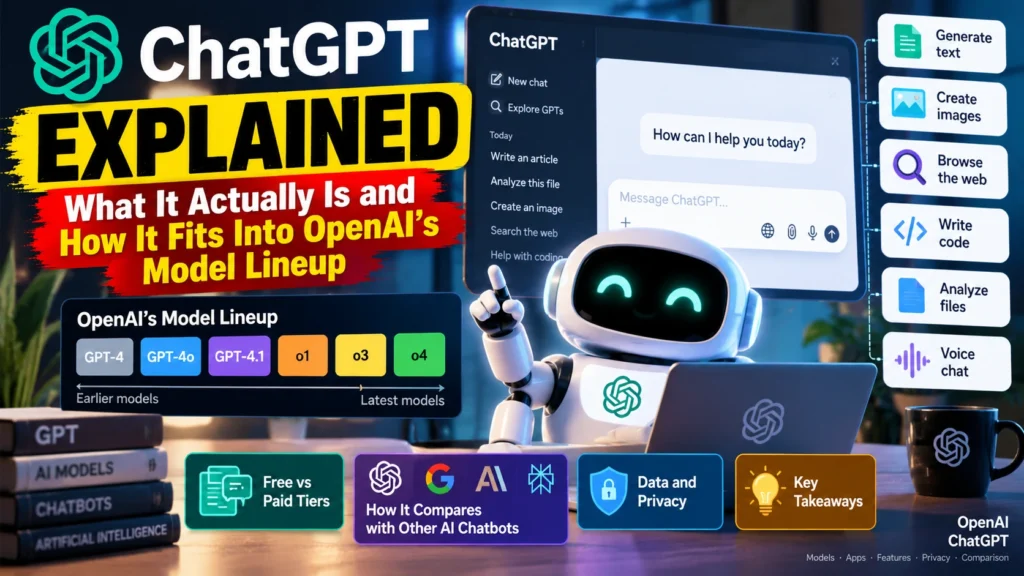
ChatGPT is the consumer-facing chat application built by OpenAI, while GPT (short for Generative Pre-trained Transformer) refers to the underlying family of language models that actually generate ChatGPT’s responses. This distinction matters because OpenAI’s GPT models are also made available separately through an API that other companies build their own products on top of, meaning the same underlying model technology can show up inside many different third-party apps and services beyond the ChatGPT interface itself, often without a user realizing OpenAI’s technology is what’s actually running behind the scenes.
What ChatGPT Can Do
Beyond generating conversational text responses, ChatGPT has expanded well past a simple text chatbot to include image generation and analysis, the ability to browse the web for current information, code execution for tasks like data analysis, custom chatbot creation through OpenAI’s GPTs feature, and voice conversation capability. It also supports file uploads, allowing it to analyze documents, spreadsheets and images as part of a conversation, and integrates with a growing set of third-party services and tools depending on the plan.
Free vs Paid Tiers
ChatGPT offers a free tier with access to a capable model and usage limits, alongside paid subscription tiers that generally provide access to more advanced models, higher usage limits, faster response times, and additional features like more extensive file analysis and priority access to new capabilities as they roll out. OpenAI has also introduced business and enterprise-focused plans with additional administrative controls, data handling guarantees, and team collaboration features aimed at organizational use rather than individual consumers.
How ChatGPT Fits Among Other AI Chatbots
ChatGPT competes directly with other major AI chatbots including Google’s Gemini, Anthropic’s Claude, and others, each built on a different underlying model with its own particular strengths, training approach, and design philosophy. Independent comparisons and benchmark testing generally find that leading chatbots from major AI labs perform closely on many common tasks, with specific differences emerging around coding, creative writing, factual accuracy, response length and tone, and specific feature sets like web browsing or file handling depth, rather than one tool being definitively superior across every category.
Data and Privacy Considerations
As with any AI chatbot, conversations with ChatGPT may be used to improve OpenAI’s models by default on some plans, though OpenAI provides settings to opt out of this data usage and offers stronger data handling guarantees on its business and enterprise tiers. Anyone using ChatGPT for sensitive personal, business, or client information should review OpenAI’s current data usage and retention policies directly, since these terms have been updated over time and vary by specific plan.
Bottom Line
ChatGPT is OpenAI’s consumer chatbot application, built on top of the company’s GPT model family, and it has grown from a simple text-based chatbot into a broader AI assistant with image, voice, web browsing and coding capabilities across free and paid tiers. It remains one of several genuinely capable leading AI chatbots, and the right choice among ChatGPT and its competitors generally comes down to specific feature needs, pricing, and personal preference for tone and response style rather than one clear universal winner.
Sources
- OpenAI official ChatGPT and API documentation
- Independent AI chatbot comparison and benchmark testing from major tech outlets
- OpenAI data usage and privacy policy documentation
- Industry analysis of ChatGPT subscription tiers and enterprise offerings