Smartphone Chips and Displays: The Complete Buying Guide
The two specs that decide how a phone actually feels day-to-day are the chip inside it and the screen on top of it — everything else...
The two specs that decide how a phone actually feels day-to-day are the chip inside it and the screen on top of it — everything else (camera, software, brand) is secondary once those two are wrong for you. This guide ties together how phone processors are named, what actually separates the display types, and where charging speed and refresh rate fit into the decision.
Choosing a chip
Every phone chip maker uses a different naming convention, and the numbers don’t translate directly between them. Qualcomm’s Snapdragon tiers, MediaTek’s Dimensity lineup, and Apple’s A-series chips each solve the same problem — balancing performance against battery drain — differently enough that the same-sounding tier name can mean very different real-world performance depending on the maker and the year.
- Snapdragon Chipset Explained: What Every Number in Qualcomm’s Naming Actually Means — decodes what every number in a Snapdragon model name actually signals about tier and generation.
- MediaTek Dimensity Explained: Why Qualcomm’s Biggest Rival Is Finally Getting Credit — covers why MediaTek stopped being the budget fallback and started competing on flagship performance.
- Apple A-Series Chip Explained: Why iPhones Punch Above Their Spec Sheet — explains why iPhones consistently outperform their spec sheet, and where that advantage comes from.
- Smartphone Processor Explained: How Snapdragon, Dimensity and Apple Silicon Actually Compare in 2026 — is the direct side-by-side of all three if you just want the comparison.
Choosing a display
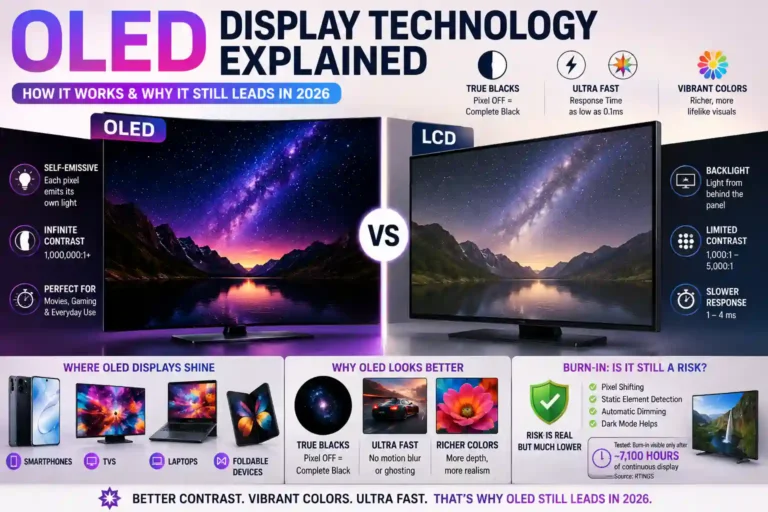
AMOLED vs LCD debates get most of the attention, but refresh rate and HDR certification affect daily use more than panel type alone. A cheap AMOLED phone can look worse than a good LCD one if the refresh rate and brightness handling aren’t there.
- AMOLED Display Explained: What the ‘Active Matrix’ in AMOLED Actually Does — explains what the ‘active matrix’ part of AMOLED actually does to make blacks and colors look different from LCD.
- Smartphone Refresh Rate Explained: 60Hz vs 90Hz vs 120Hz vs 144Hz in 2026 — breaks down whether jumping from 90Hz to 120Hz or 144Hz is worth paying for.
Charging and power
Wattage numbers on the box are only half the story — the phone’s charging controller decides how much of that wattage it actually uses, and for how long.
- Battery Charging Speed Explained: What Wattage Numbers Actually Mean for Your Phone — explains what those wattage numbers on the charging brick actually mean for real-world charge time.